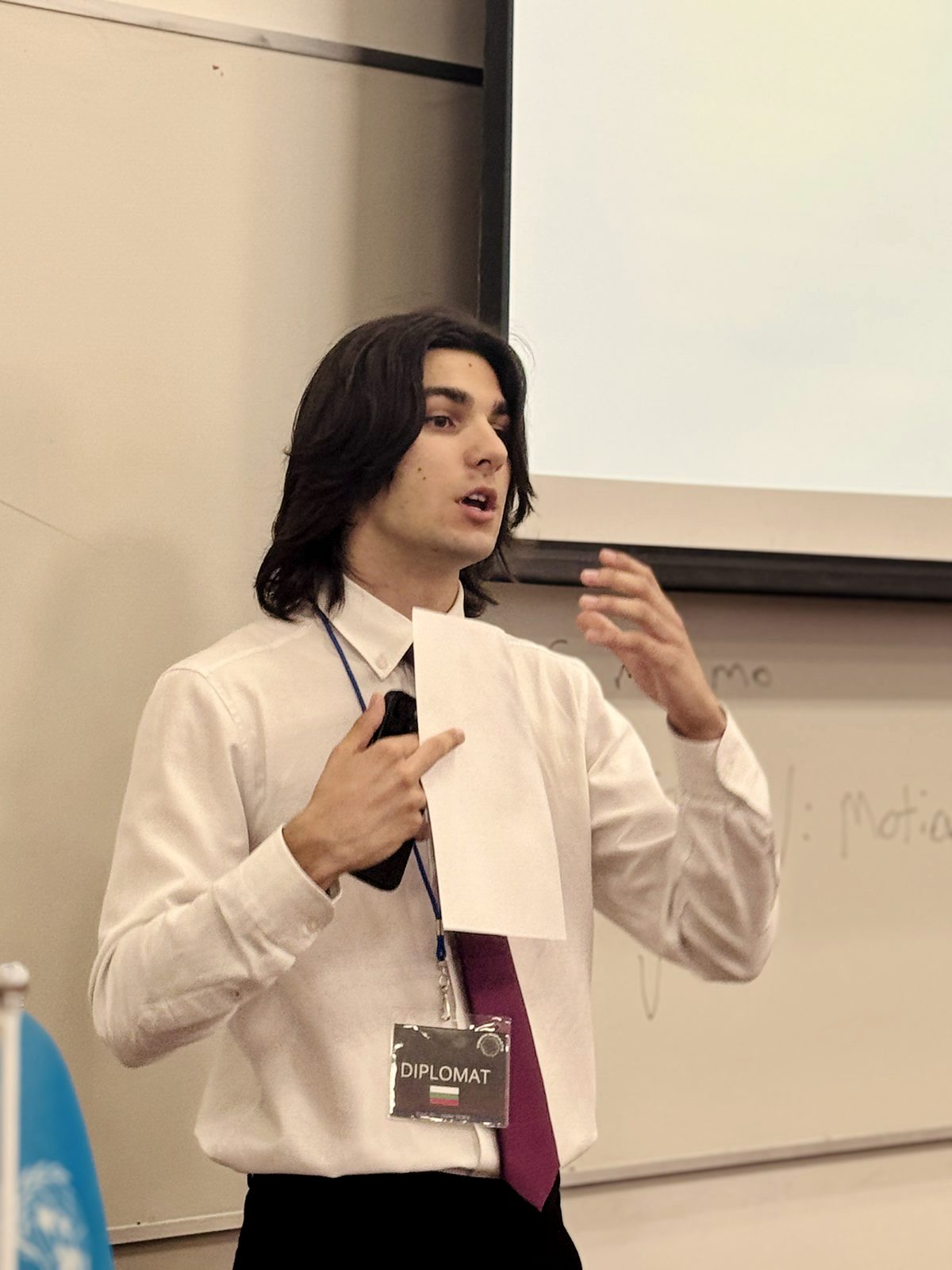
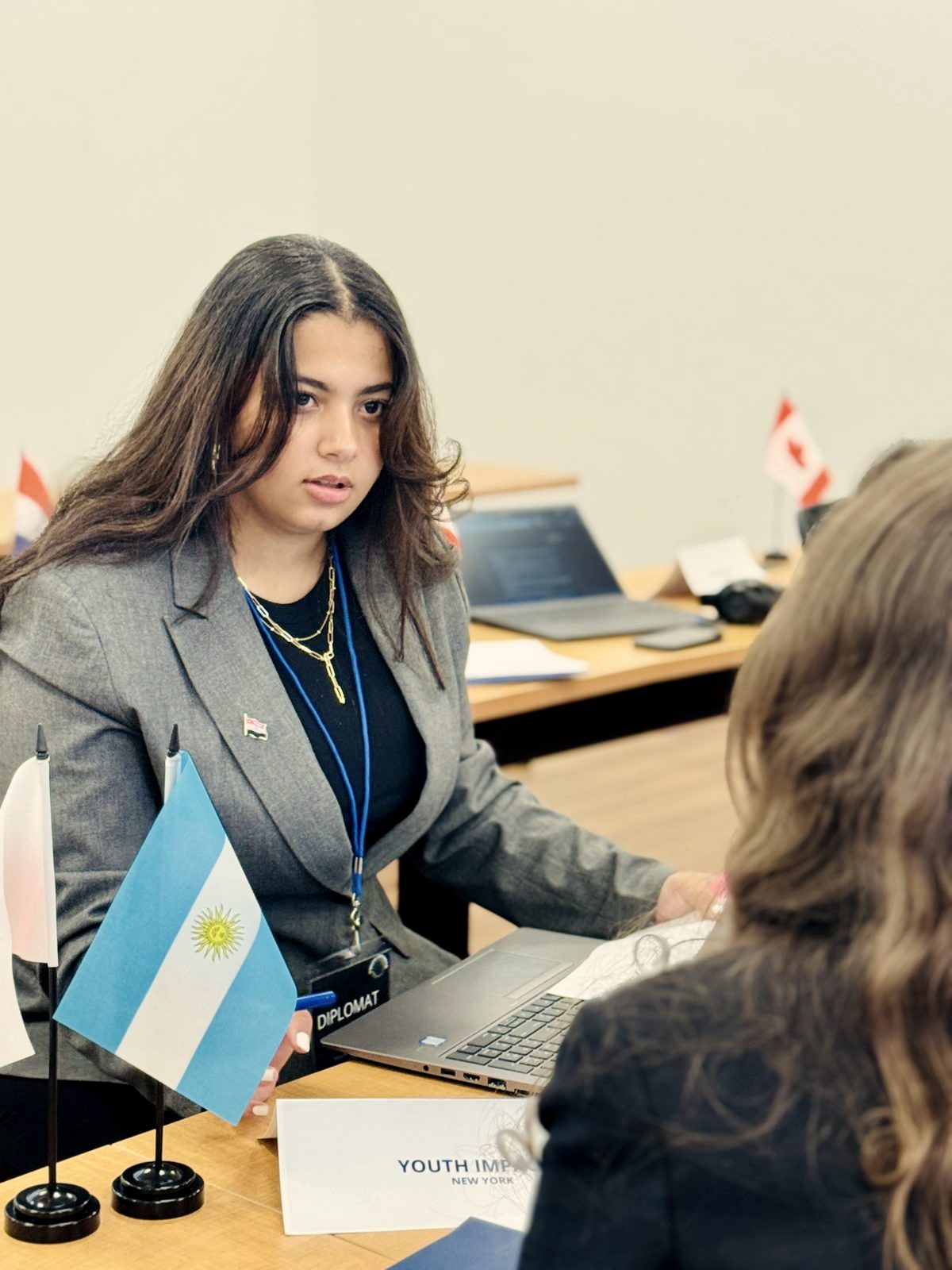
Sixty delegates. One General Assembly. A global challenge that no nation can solve alone.
Governing Artificial Intelligence: Safeguarding Humanity, Bridging Global Divides, and Shaping Our Shared Future.
Artificial intelligence is transforming economies, education, healthcare, national security and the future of work.
Its development is moving faster than many of the international frameworks designed to govern its impact.
Who should establish the rules? How can technological progress remain fair? Can nations protect their citizens while encouraging innovation?
At The Global 60, delegates represent countries, defend national interests, negotiate competing priorities and develop a proposed international framework for responsible AI governance.
This is not a classroom discussion about technology. It is a simulation of the diplomatic decisions shaping our shared future.
How can the international community establish shared principles for artificial intelligence that protect humanity, promote innovation, and ensure that every nation has a fair opportunity to benefit from technological progress?
Artificial intelligence governance is an active issue within the United Nations.
In August 2025 the UN General Assembly adopted resolution A/RES/79/325, establishing the Global Dialogue on AI Governance and an Independent International Scientific Panel on AI.
The Global Dialogue brings governments and other stakeholders together to discuss the opportunities, risks, governance and societal impacts of artificial intelligence.
Its second session is scheduled for 3 – 4 May 2027 in New York City, shortly after The Global 60.
Our delegates will examine many of the same broad policy challenges, in the same city, in the same month.
The official references ›The first two dates are the United Nations' own; the fourth is as scheduled by the United Nations at the time of publication. Only the third belongs to The Global 60, an independent simulation.
Artificial intelligence will shape the world in which today's students study, work, build businesses, lead institutions and take part in public life.
Its opportunities are significant. So are the questions of fairness, access, accountability and control.
At The Global 60, delegates move beyond observing world events and examine them as national policymakers would.
These perspectives do not always agree. That is precisely why diplomacy matters.
Delegates must understand positions they may not personally share, identify common interest, and negotiate practical compromise.
"You are not here simply to express an opinion. You are here to represent a nation, defend its interests, and discover what cooperation can achieve."
Five diplomatic policy areas, each with the questions that should guide a delegation's research.
The Committee Background Guide, published to admitted delegates, develops each pillar in depth. No knowledge of computer programming is required: this is a diplomatic and public-policy debate, not a technical competition.
The Model United Nations experience, step by step, for first-time and experienced delegates alike.
Delegates experience how international cooperation depends on research, compromise, persuasion and clear policy proposals.
The Global 60 Framework for Responsible Artificial Intelligence.
The thematic name for the Assembly's outcome, if a resolution is negotiated and adopted by the delegates. Nothing is written in advance, and adoption is never guaranteed: the decision belongs to the room.Standard Model UN rules of procedure: speakers' list, moderated and unmoderated caucus, motions, working papers, draft resolutions, amendments and voting. Published in the delegate handbook. How the Assembly runs.
The Global 60 is designed to build capabilities that remain valuable across higher education, leadership and professional life.
These are practical learning outcomes of the programme. The Global 60 does not promise internships, university admission, employment, United Nations recognition or career placement.
Every delegate should be able to answer these questions about their assigned country.
Each link opens the publishing institution's own website; the one-line descriptions are ours.
All content on this page is Youth Impacts' own editorial work and summarises these sources without reproducing them. Youth Impacts is not affiliated with any institution listed here. The Global 60 and Youth Impacts are independent programmes and are not affiliated with or endorsed by the United Nations.
Applications for the Founding Class. Round one closes 15 December 2026.