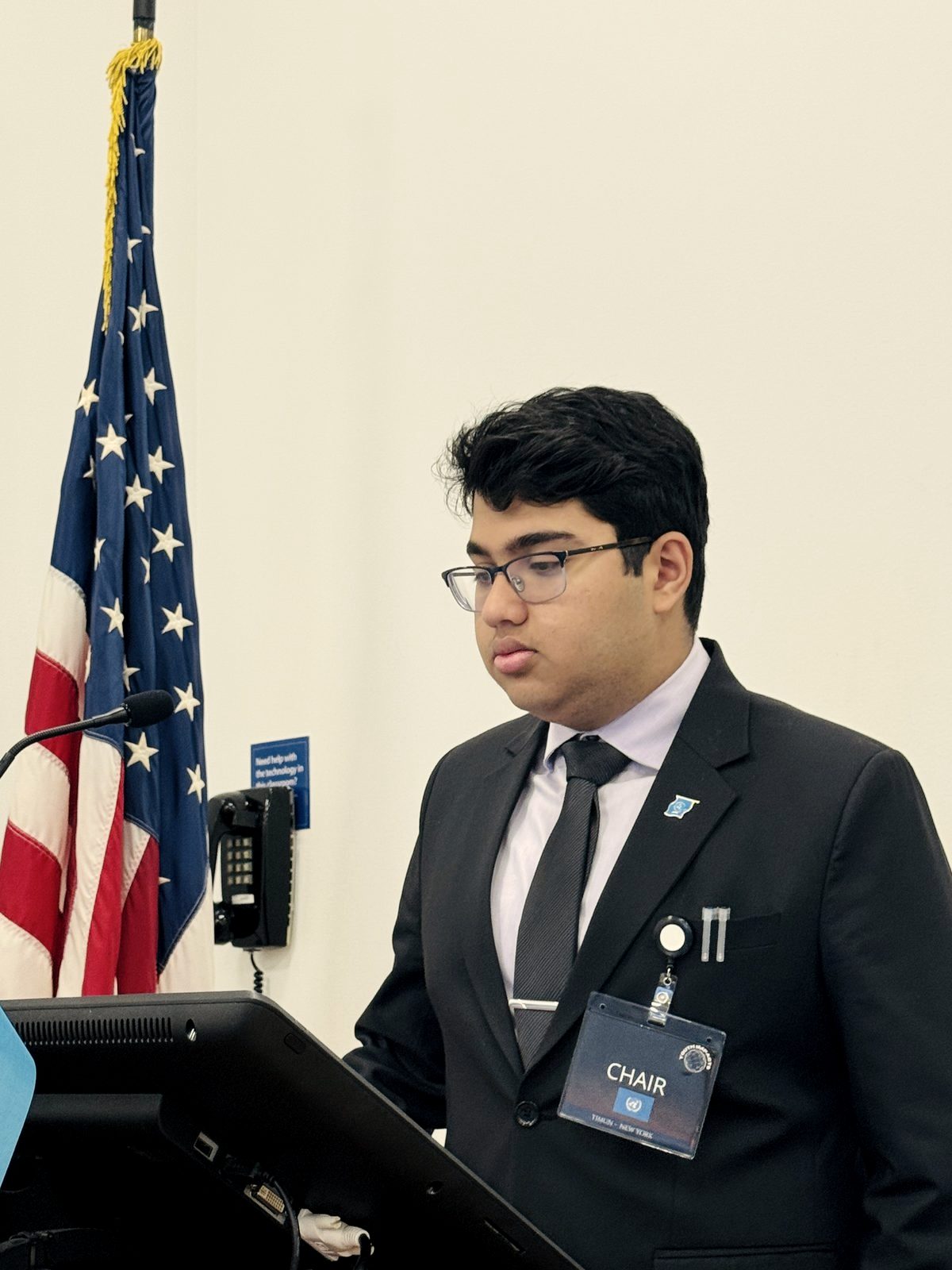
Model UN country assignments work like this: the conference secretariat builds a matrix of every committee and every seat, allocates countries to schools or individual delegates according to delegation size, experience and stated preferences, and then each school distributes its seats among its own students. The country you receive is a starting point, not a verdict on your ability, and it has almost no effect on how you are scored.
Key takeaways
- A secretariat assigns countries from a delegation matrix that lists every committee, every seat and every country represented in each room.
- Schools usually receive a block of countries and allocate them internally; individual delegates are assigned directly by the conference.
- Secretariats deliberately balance experienced and first-time delegates across large and small states so that no chamber is dominated by one school or one skill level.
- Permanent members of the Security Council and other "big" countries are not an advantage in scoring; chairs assess research, diplomacy and drafting, not the size of the flag.
- A small state can win with niche expertise, credibility on one topic and leadership of a bloc that larger delegations need.
- At The Global 60, assignments account for age, experience and representation, and no tier can buy country choice or speaking time.
- How Model UN country assignments work: the matrix
- How schools and individual delegates receive assignments
- Why experience and representation are balanced
- Why big countries are not an advantage in scoring
- How to win with a small country
- What to do when you dislike your assignment
- How The Global 60 assigns countries
- Where to go next
How Model UN country assignments work: the matrix
A secretariat builds the country matrix by listing every committee it will run, deciding which member states and observers sit in each one, and then filling those seats from the delegations that have registered. The result is a spreadsheet, often called the delegation matrix, in which each row is a school or individual and each column is a committee.
The matrix is constrained from the start. A simulation of the Security Council can only have fifteen seats. A General Assembly committee could in principle seat all 193 member states of the United Nations, but a conference will normally cut that to the number of delegates it expects, keeping the countries that matter most to the topic. A specialised body, a historical crisis or a regional organisation has its own membership, and the matrix follows it.
Once the seats exist, the secretariat fills them. Most secretariats work in this order:
- Delegation size first. A school sending twenty students needs twenty seats spread across committees; a school sending three needs three. Large delegations are placed before small ones because they are harder to fit.
- Preferences second. Many conferences ask schools to rank regions, committees or specific countries. Preferences are honoured where they do not break the balance of a room.
- Balance last. The organisers then look at each committee and ask whether it has a sensible mix of schools, experience levels and regional blocs. Where it does not, they swap.
How schools and individual delegates receive assignments
Schools receive a block of countries and committees from the conference, and their faculty adviser or head delegate then distributes those seats among the students on the team; individual delegates who register without a school are assigned a single country and committee directly by the secretariat. In both cases the assignment arrives by email, typically several weeks before the conference, together with the background guides for each committee.
Inside a school team, the internal allocation is usually a mixture of seniority, interest and coaching judgement. A common practice is to give experienced students the harder committees and to place first-time delegates in larger General Assembly rooms where the pace is slower. A guide to what happens once you are in the room is in our article on your first Model UN conference.
Individual delegates have less say, but not none. Registration forms often ask for experience level and a committee preference, and secretariats do use them. If you register alone, answer those questions honestly and specifically; "any committee" is the surest way to receive the seat nobody else wanted.
Check the paperwork early
Position papers are written to a country and a committee. As soon as your assignment arrives, confirm the committee's topics and the position paper deadline; both are usually in the background guide, and both are easy to miss when assignments arrive in the middle of term.
Why experience and representation are balanced
Secretariats balance experience and representation because a committee in which all the confident delegates hold the influential countries, and all the beginners hold the rest, produces a poor debate for everyone. The experienced delegates face no resistance; the beginners never get near the drafting table; the chairs have little to assess.
Model UN country allocation therefore tries to spread three things evenly across each room:
- Experience. Veteran delegates are distributed across large and small states, so that a first-time delegate holding a permanent member of the Security Council is a normal event rather than an accident.
- Schools. No single delegation should hold a voting bloc on its own. Organisers avoid giving one school every member of a regional group in the same committee.
- Representation. The countries in the room should reflect the real politics of the topic, so that debate on, say, ocean plastics includes coastal states, landlocked states, major producers and the most affected small islands.
This is also why a school that asks for a permanent member in every committee will usually be refused; granting it would concentrate the most active delegations in a handful of rooms.
Why big countries are not an advantage in scoring
Big countries are not an advantage in scoring because chairs assess how well you represent your assignment, not how powerful the assignment is. The scoring rubrics used by most conferences reward research, accuracy of position, quality of speeches, diplomacy in caucus, contribution to drafting and conduct under the rules of procedure. None of those criteria mention the size of the economy on your placard.
In practice, the so-called P5 countries in Model UN, the five permanent members of the Security Council (China, France, Russia, the United Kingdom and the United States), can be harder to play well. Their positions are heavily documented, so errors are easy for a chair to spot. Other delegates expect them to lead, which means more speaking and more exposure. And in a Security Council simulation, the veto invites confrontation that a careless delegate cannot manage.
Chairs also notice when a delegate coasts on a country's reputation. A delegate representing a major power who repeats headlines rather than positions, or who dominates the room without building consensus, will typically lose to a delegate holding a small state who did the reading and moved the text. Our guide to how Model UN awards are decided sets out what is actually assessed.
| Assumption | What actually happens |
|---|---|
| A P5 country gives you more speaking time | Speaking time is set by the speakers' list and the rules of procedure, and is the same for every delegate |
| Chairs favour influential countries | Chairs assess research, diplomacy and drafting; the country is context, not credit |
| Small states cannot lead a bloc | Small states routinely lead regional and issue-based blocs because larger states need their votes |
| A hard assignment lowers your award chances | A well-played difficult assignment is often more visible to a chair than a well-played easy one |
How to win with a small country
You win with a small country by becoming the delegate in the room who knows one thing better than anyone else, and by making the larger delegations need you. Small country Model UN strategy rests on three assets: niche expertise, credibility and bloc leadership.
Niche expertise
Find the angle on the topic where your country has a genuine stake or a genuine record, for example a small island state on sea-level rise, a landlocked country on transit rights, or a country that hosts a large refugee population on burden-sharing. Read the primary sources on that angle until you can quote them, and become the room's reference point on it. Our module on researching your country shows where to look.
Credibility
Speak accurately and consistently. A small state cannot bluff its way through a debate, and it does not need to; a delegate who is right every time they speak accumulates trust that larger, noisier delegations lack. Credibility is what turns a small country into the delegate others consult before they draft.
Bloc leadership
Large delegations need votes, and votes come from small states. Offer to coordinate a regional group or an issue-based coalition, hold the pen on the working paper, and merge drafts on terms that keep your bloc together. The mechanics are in our guides to lobbying and caucusing and leadership in committee. The delegate who holds the pen is rarely forgotten by a chair, whatever the flag.
What to do when you dislike your assignment
When you dislike your assignment, the practical answer is to accept it quickly, find the interesting problem inside it and prepare as if you had chosen it, because assignment changes are rare and asking for one usually costs more goodwill than it gains. Most secretariats will only swap a country for a documented reason, such as a delegate's nationality creating a genuine conflict, and even then only if the matrix allows.
A few reframes help:
- Unfamiliar is an advantage. Nobody in the room will have researched your country either, which means the accurate delegate wins by default.
- Uncomfortable positions are teachable. Representing a view you disagree with is the central discipline of diplomacy, and it is what admissions officers and employers mean when they praise Model UN.
- Obscure countries have obscure leverage. A country you have never heard of may sit in a voting bloc that decides the resolution.
If a change is genuinely necessary, ask once, politely, early and through your faculty adviser, with the reason stated plainly. Then prepare for the original country in case the answer is no.
How The Global 60 assigns countries
The Global 60 assigns countries by taking account of each delegate's age, experience and the balance of representation in each of its three chambers of approximately twenty delegates, and no tier can buy country choice, speaking time or any other academic advantage. Sixty delegates sit in three small chambers rather than one large hall, so the matrix is small, and the academic team can look at each seat individually.
In practice that means a sixteen-year-old attending their first conference and a university student with several years of experience will not be placed in the same room at random. Experience is distributed so that each chamber has a credible mix, and representation is chosen to suit the committee topics, which are announced to admitted delegates. Country information is provided at the welcome desk on arrival where it has already been assigned.
The programme has three admission tiers, but they change the hotel room, transfers, hospitality and parent seating only. The admission and fees page states the rule directly: the academic experience is identical on every tier, and no tier affects country assignment, speaking time, committee role, awards or recognition. Each chamber gives Best Delegate, Outstanding Delegate, Honourable Mention and Best Position Paper on the same criteria described above. Details of the chambers themselves are on The Assembly page.
Where to go next
Once your assignment arrives, the next step is a position paper; our free guide to writing a position paper and the 30-day preparation plan take you from country name to first speech. If you are considering The Global 60, the Assembly page explains the three chambers and the application takes eight to twelve minutes.
Frequently asked questions.
Who decides which country I represent in Model UN?
The conference secretariat assigns countries to schools and individual delegates from a delegation matrix. Schools then distribute their block of seats among their own students, usually through the faculty adviser or head delegate.
Is it better to get a big country like the United States or China?
Not for scoring. Chairs assess research, diplomacy, drafting and conduct, not the power of the country. Permanent members are often harder to play because their positions are well documented and other delegates expect them to lead.
Can I request a specific country?
Many conferences let schools rank preferences for regions, committees or countries, and secretariats honour them where the balance of the room allows. Individual delegates can usually state a preference at registration. Requests are not guaranteed.
Can I change my country assignment if I do not like it?
Rarely. Secretariats normally only swap for a documented reason, such as a conflict with a delegate’s nationality, and only if the matrix allows. Ask once, early and through your adviser, then prepare for the original country in case the answer is no.
How does a small country win an award in Model UN?
By developing niche expertise on the topic, speaking accurately every time, and leading a bloc that larger delegations need for votes. Holding the pen on a working paper is one of the most visible things a delegate can do.
How does The Global 60 assign countries?
Assignments account for age, experience and representation across three chambers of approximately twenty delegates. No tier affects country assignment, speaking time, committee role, awards or recognition.

Youth Impacts is a Model United Nations organisation. Its flagship New York experience is The Global 60: sixty delegates, three small chambers, 22 – 25 April 2027, admission by application and interview. Youth Impacts Model United Nations (YIMUN) has run since 2025. Questions: info@youthimpacts.com. Published 19 September 2026.